At 25, everything feels possible.
You carry dreams without proof. You speak before the world gives you permission. You make, risk, fail, try again. And somewhere inside that beautiful uncertainty, the future begins.
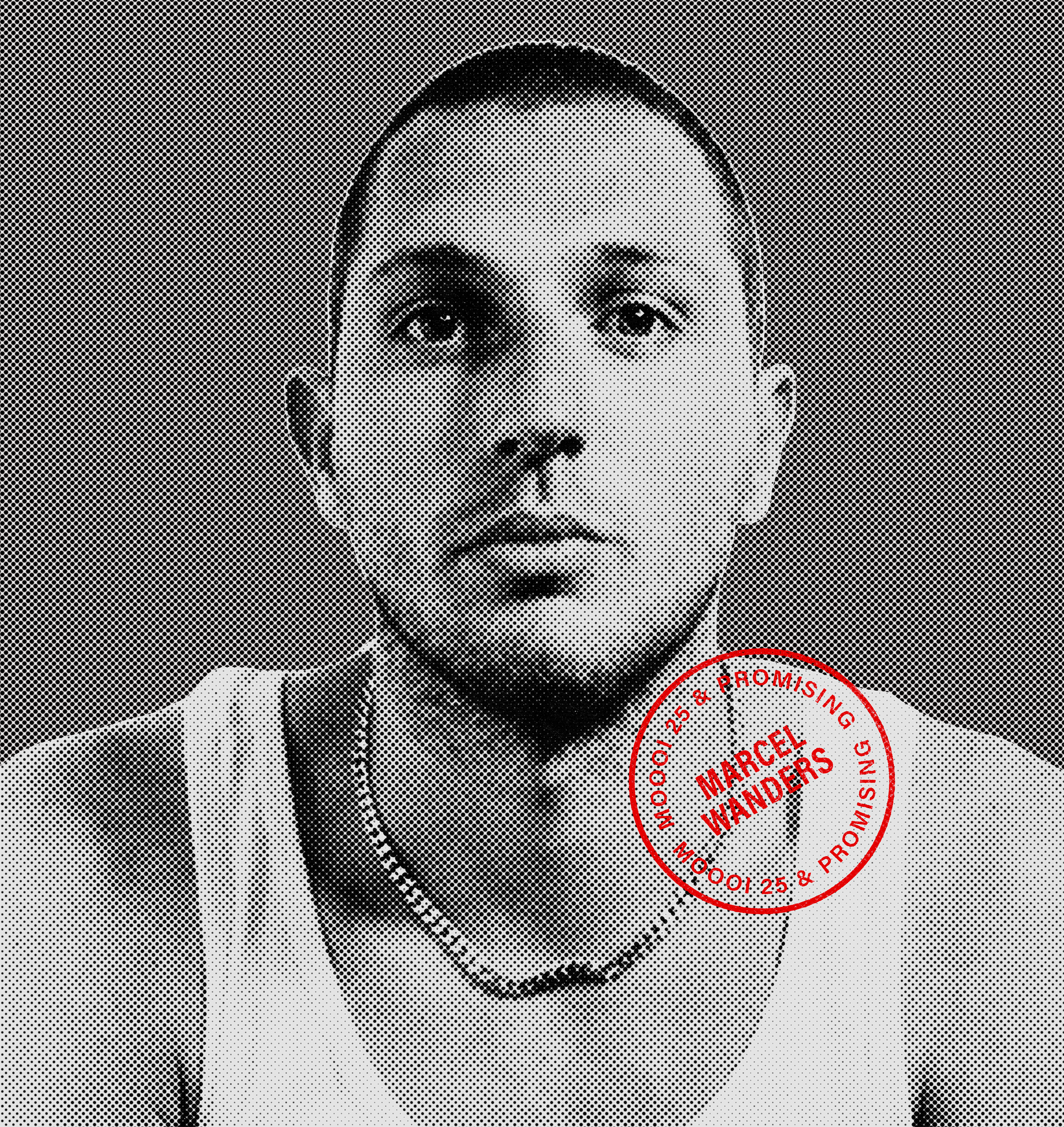
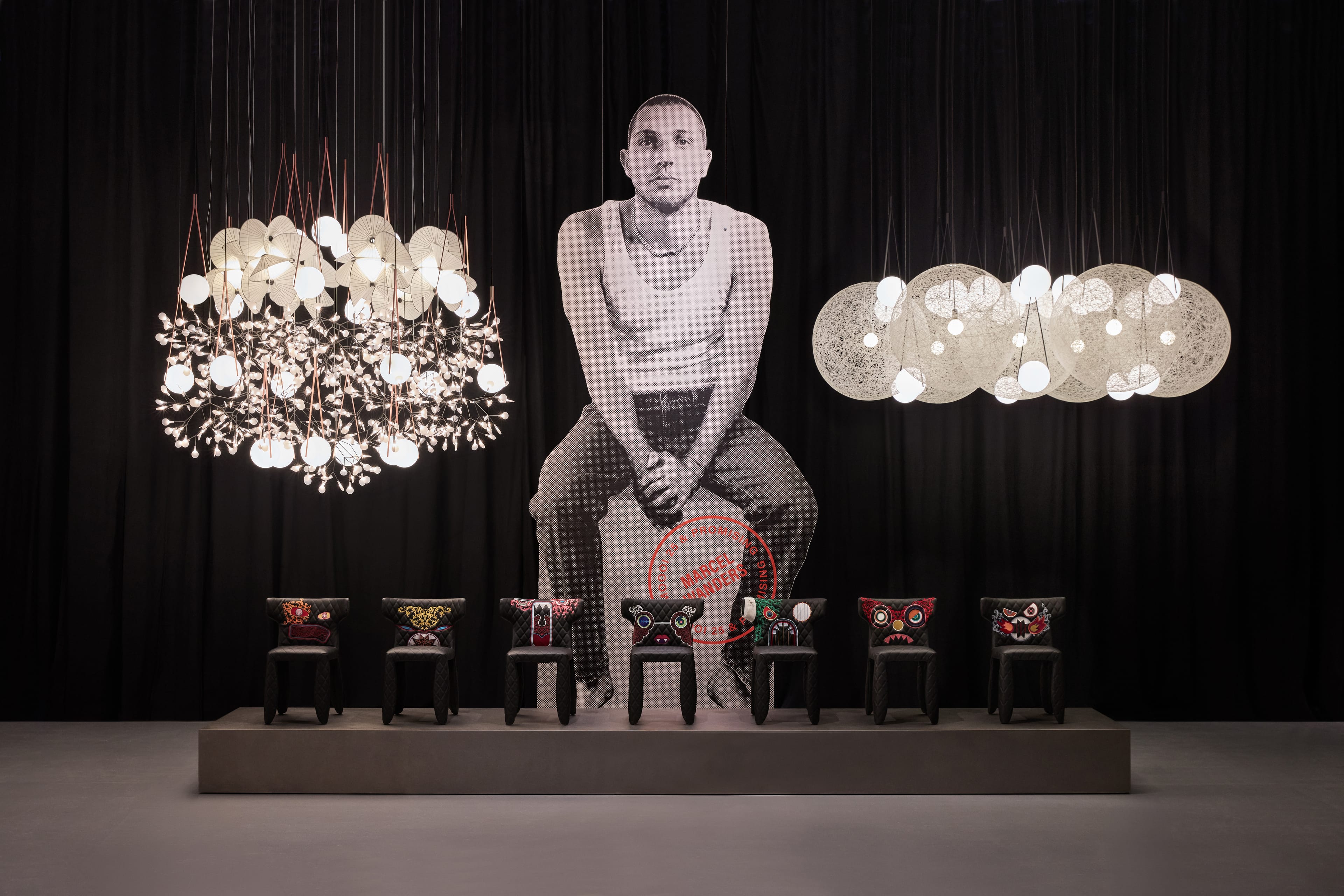
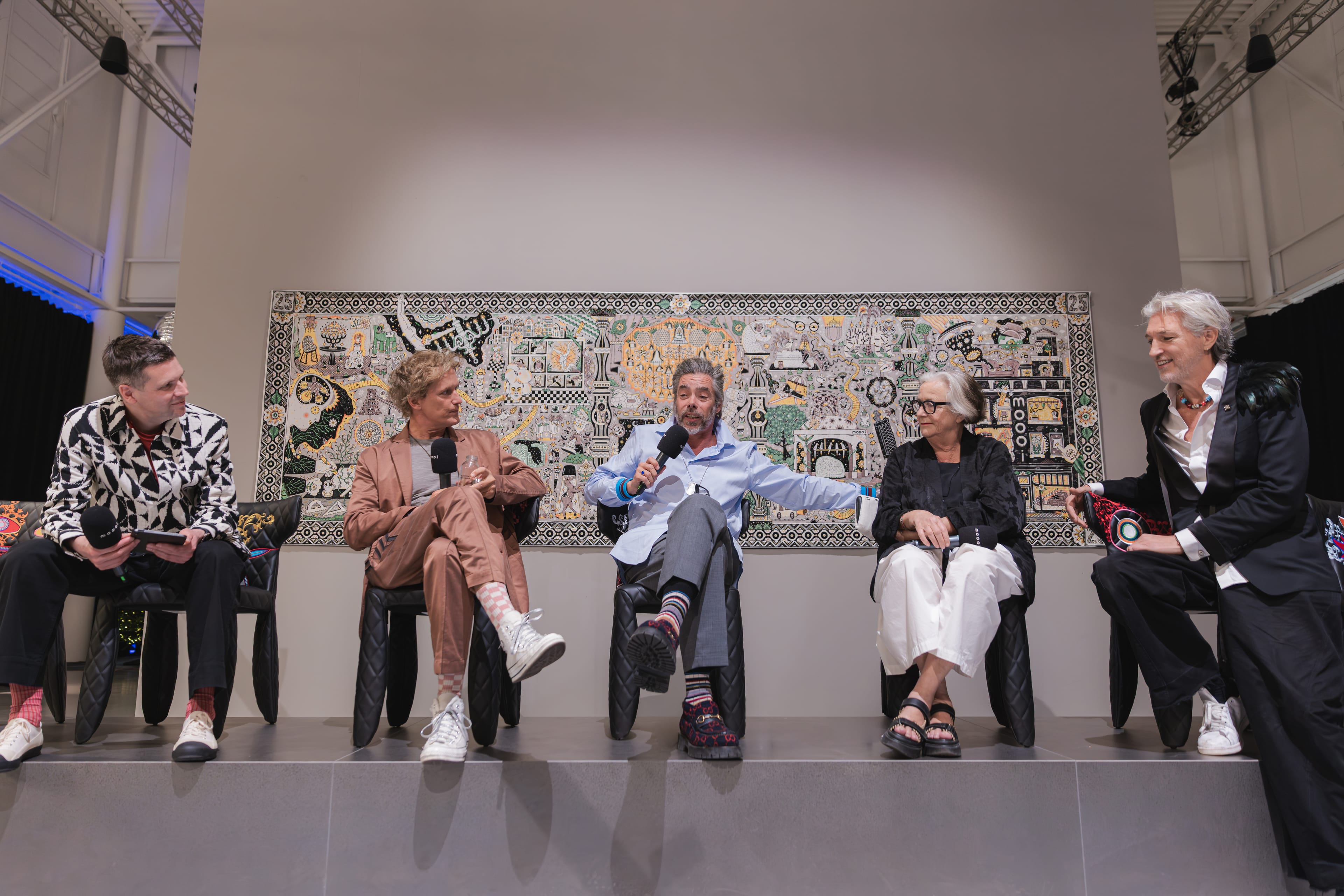
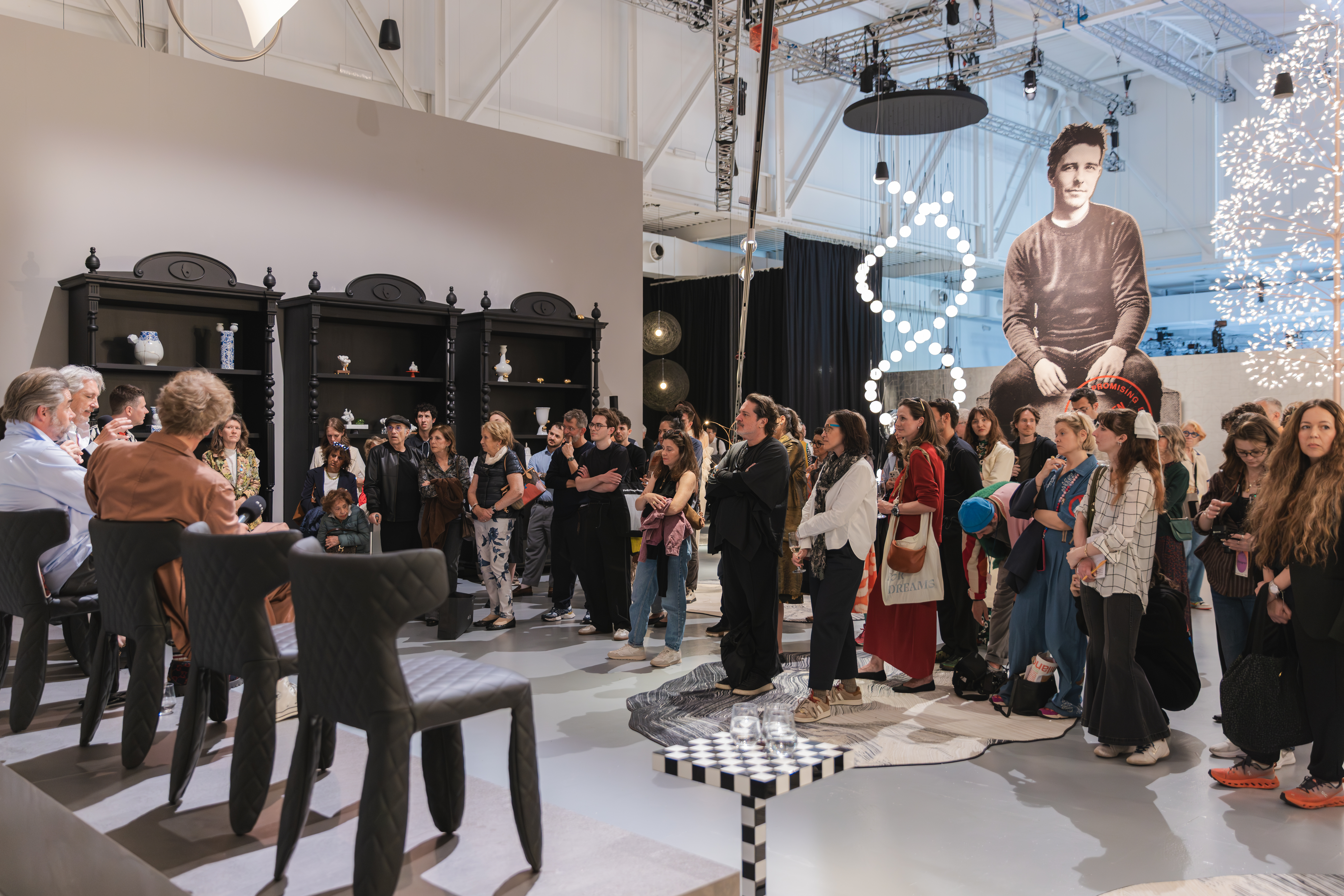
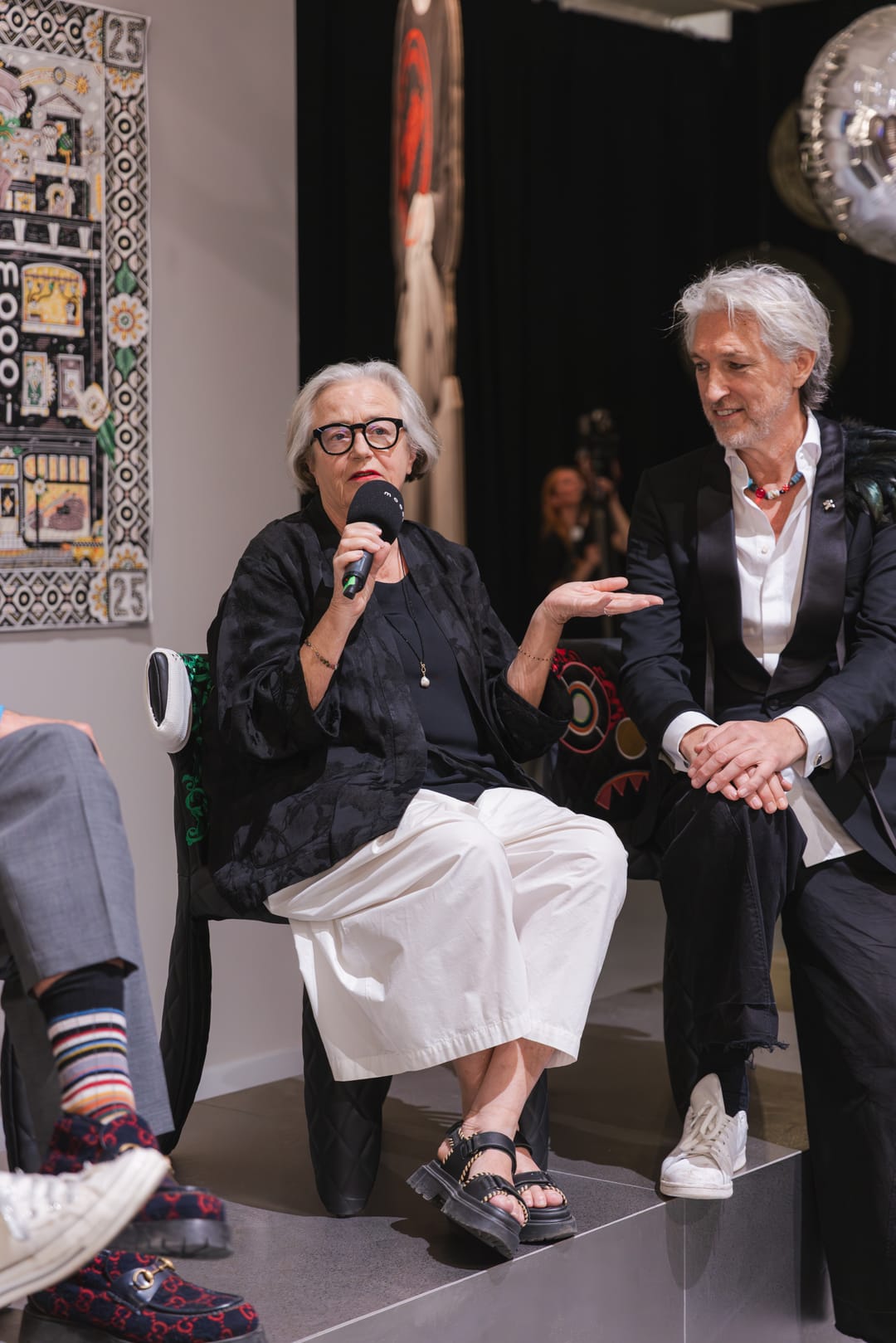
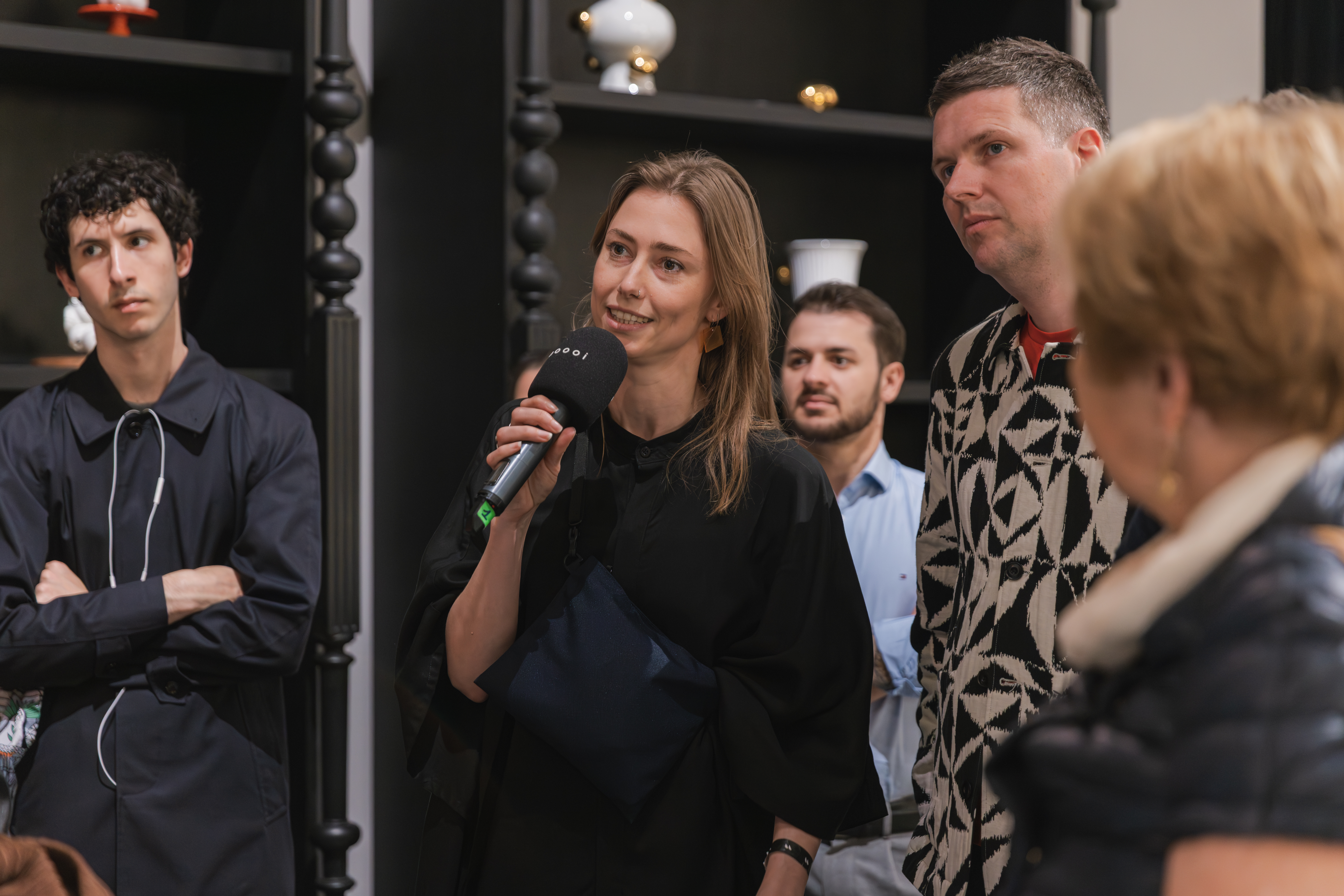
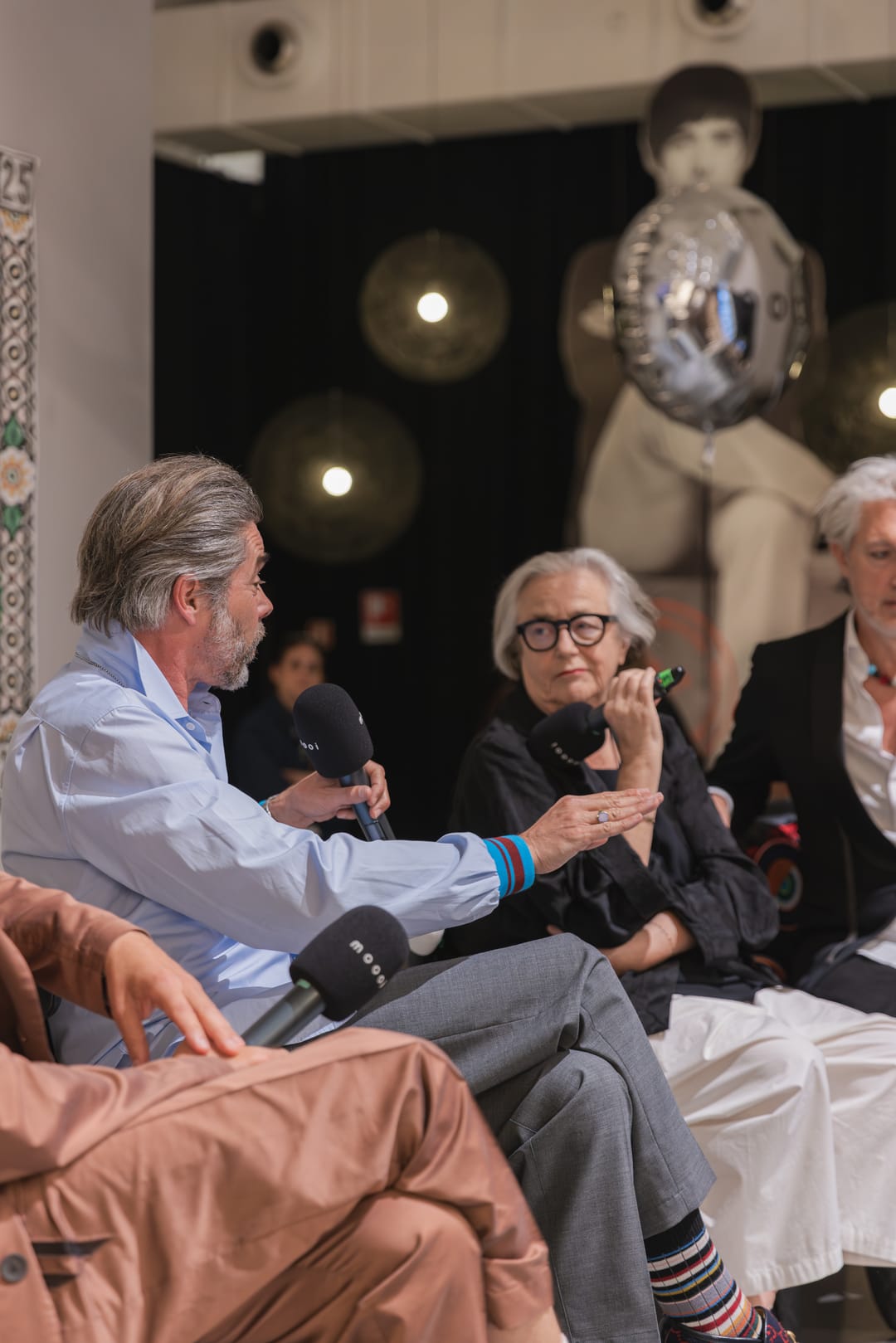
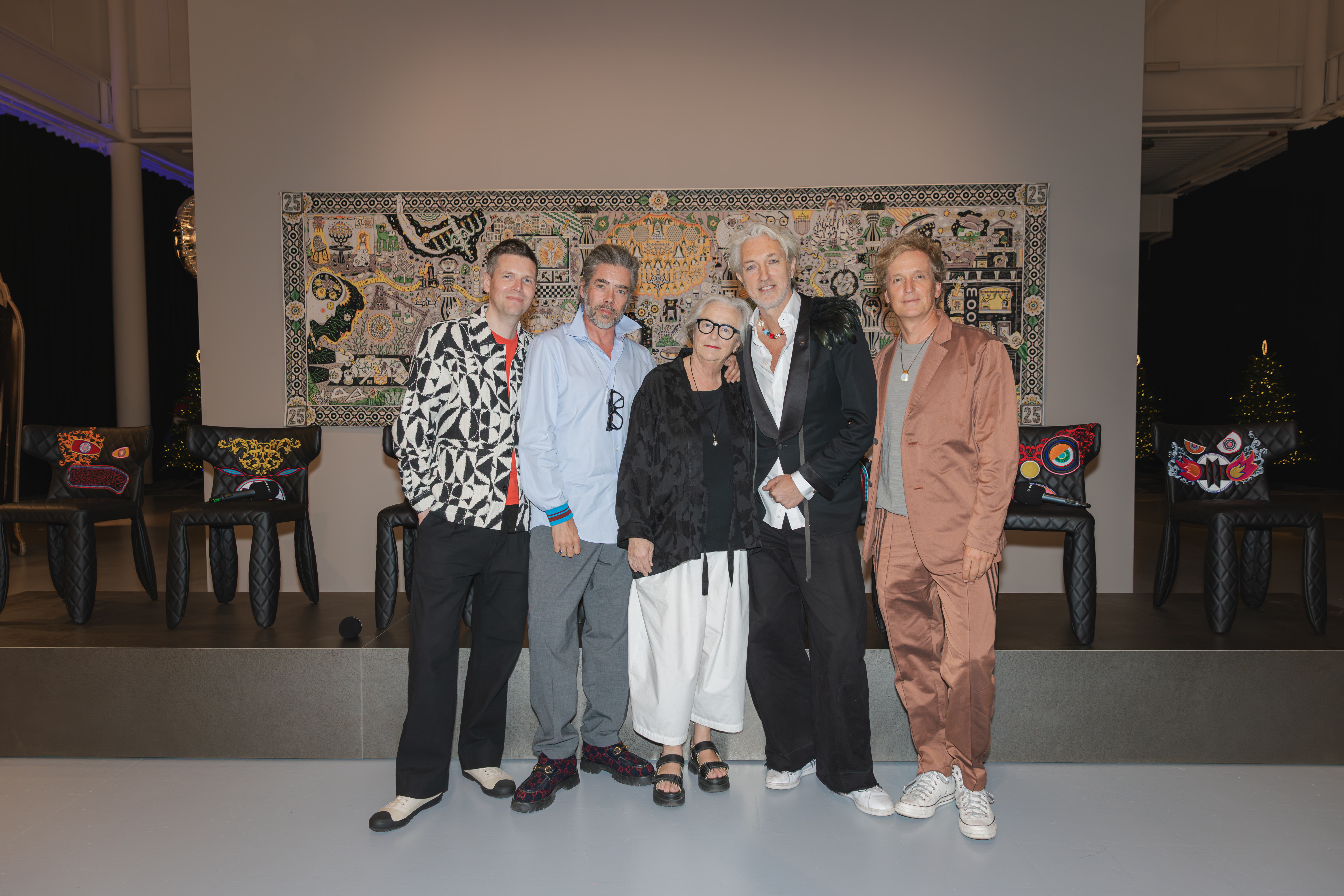
During Milan Design Week, Dezeen’s editorial director Max Fraser hosted an intimate panel in celebration of Moooi’s 25th anniversary. Together with Marcel Wanders, Yves Béhar, Li Edelkoort and Job Smeets, he reflected on what it means to be 25 and promising.
The conversation looked back at first risks, early dreams, creative courage and the rise of Dutch design. It also looked forward. To human intelligence. To analogue futures. To authenticity, radical imagination and the power of staying young in spirit.
Listen to the full audio of the talk here.
MOOOI 25 AND PROMISING: OPENING
Good afternoon, everybody. Thank you all for coming.
My name is Max Fraser, editorial director at Dezeen. It’s a great pleasure to host this discussion, brought about by Moooi’s 25th anniversary.
So first, congratulations to Moooi. Twenty-five years of fearless imagination.
A lot has happened in those years. Milan Design Week has grown to an epic scale. The design industry has expanded and changed. Technology has moved at incredible speed. The iPhone arrived during this period. So did social media, artificial intelligence and a boom in digital publishing.
Dezeen is also 20 years old this year, so we share a little of that timeline.
We have also lived through a pandemic, financial crises and a growing awareness of the ecological crisis. When you reach a milestone like this, a quarter of a century, it makes you reflect. On successes. On failures. And on what the next 25 years might ask from us.
Today, we ask: what would it mean to be a 25-year-old designer now?
A 25-YEAR-OLD COMPANY WITH A PUNK SPIRIT
When Moooi became 25 years old, I first thought: why should we celebrate?
The people around me said we had to. So finally I said, okay, let’s celebrate. But I wanted to make sure we did not suddenly become an established 25-year-old company. I still want Moooi to feel punk rock. Fun. Full of life. Exciting.
Then I thought: maybe 25 is not so old.
I remembered being 25 myself. Who was I then? That felt relevant.
At 25, we are still grown-up kids. We have dreams and fantasies. We are excited. We believe that what we are going to do matters.
There are sparkles. Little things moving in a direction. You meet people who become important to you. But there is no proof of your brilliance yet. You have no right to speak, really. You just have a big mouth and a wish to change the world.
That is where I would like Moooi to be. Still at the beginning. Still with everything ahead.
LI EDELKOORT AT 25: PARIS, FASHION AND FREEDOM
When I was 25, it was 1975. I am now 75, so I have to sink deep. It is half a century ago.
I was working for De Bijenkorf in the Netherlands. I was responsible for buying and fashion direction. It was the best school I could ever have had. I started there at 21, which was a lot of responsibility at that age.
Everything I know about fashion, I learned there.
In the photo, I am modelling the clothes we were buying. There was no money for a model, so I did it myself for the press dossier.
What is funny is that the clothes I am wearing, even the shoes, could be in a store today. They are right on the edge of new fashion. Exactly half a century later, that fashion is back.
I had a fantastic time. After work, we would go to the bar next door with the buyers and directors. We drank a lot. We had interesting evenings. I had fabulous boyfriends. We danced a lot.
For me, 25 was a beautiful time. Then I fell in love and moved to Paris from one day to the other. That is where my career truly began.
YVES BÉHAR AT 25: RISK AS A WAY OF WORKING
At 25, I had recently moved to San Francisco from Switzerland.
For me, it was all about risk. I always felt on the edge of failing. I thought I might have to go back home and live with my mother again.
When you are 25, you feel like you are putting everything on the table. You risk everything.
But now I realise I am still doing the same thing. Risk is a fundamental part of being a designer. Not knowing. Not being sure. Not having all the answers.
There is something beautiful about being 25. But as an older designer, you have to stay a little bit that way too.
JOB SMEETS AT 25: FREEDOM BEFORE PERMISSION
When I was 25, I was still at school. Li was one of my teachers.
In 1994, I went to Paris for a year. I did internships, including at Li’s studio. It was extraordinary. Very avant-garde.
What I noticed then was that the creator still had power. The creator could make decisions.
After I graduated, I wanted to keep my own voice in the work. Also, nobody was really interested in working with me. So I had to do it myself.
My first fair in Milan was in 1996. I designed an exhibition for Droog Design. That was also the year Marcel’s Knotted Chair was introduced. I actually hung it on the ceiling.
Marcel was already a rock star. I was still a student.
We slept in the back of the van. We drove from Eindhoven to Milan with a van full of work. We tried to smuggle things over the Swiss border. You would say there was only 100 euros worth of material inside, while the van was full of polished bronze.
That was how many of us started.
In Milan, I saw beautiful new products every year. But later, in the shops, I never saw them again. Maybe two or three. So I realised that 90 percent of what was shown in Milan were prototypes.
And if it is a prototype, you do not need to depend on a producer. You can do whatever you want.
That was the moment I found freedom of imagination. Thirty years later, I still believe in that freedom.
ADVICE TO YOUNG DESIGNERS: STAY HONEST TO YOURSELF
One reason we do this talk is to show that we were once just like young designers today.
At 25, we were promising. But we had no certainties. We did not really know what we were doing. We just hoped it would work out.
The beautiful thing is that you cannot look too far forward. You can only put energy into something. And energy always flows somewhere.
My advice to young people is this: you can lie to the world as much as you want. Fantasy is a big lie. But you have to be honest with yourself.
That is much harder.
When you really listen to yourself, you may feel alone. Your thoughts might be different from everybody else’s. You will see the cracks between you and the world. That is where you are needed.
But it is also the most difficult place to be.
So make good friends. They make you less lonely. But in your field, if you are good, you are lonely. Nobody fully gets it yet.
Try not to lie to yourself. That is my advice.
STAY IN CREATION AS LONG AS YOU CAN
There is so much pressure on design students today.
They are expected to know marketing, artificial intelligence, manufacturing, business and everything else. But the longer you stay in the state of creation, the better.
Learn how to draw. Draw really well. Make things. Build things. Stay close to craft.
That gives you a better chance of finding your own uniqueness.
Distractions are everywhere. The pressure is everywhere. But first, you need to be a creator. A designer. A thinker. A dreamer.
Stay in that space as long as you can.
FORM FINDING, NOT FORM GIVING
Everything is already there. So young designers need to know history, otherwise they risk copying too much.
This year, we saw a lot of quasi design. Quasi art show. Quasi Moooi. Many citations.
In Dutch, another word for design is “vormgeving”. It means form giving. I like that, because it suggests the gift of form.
But I think a new word now is “form finding”.
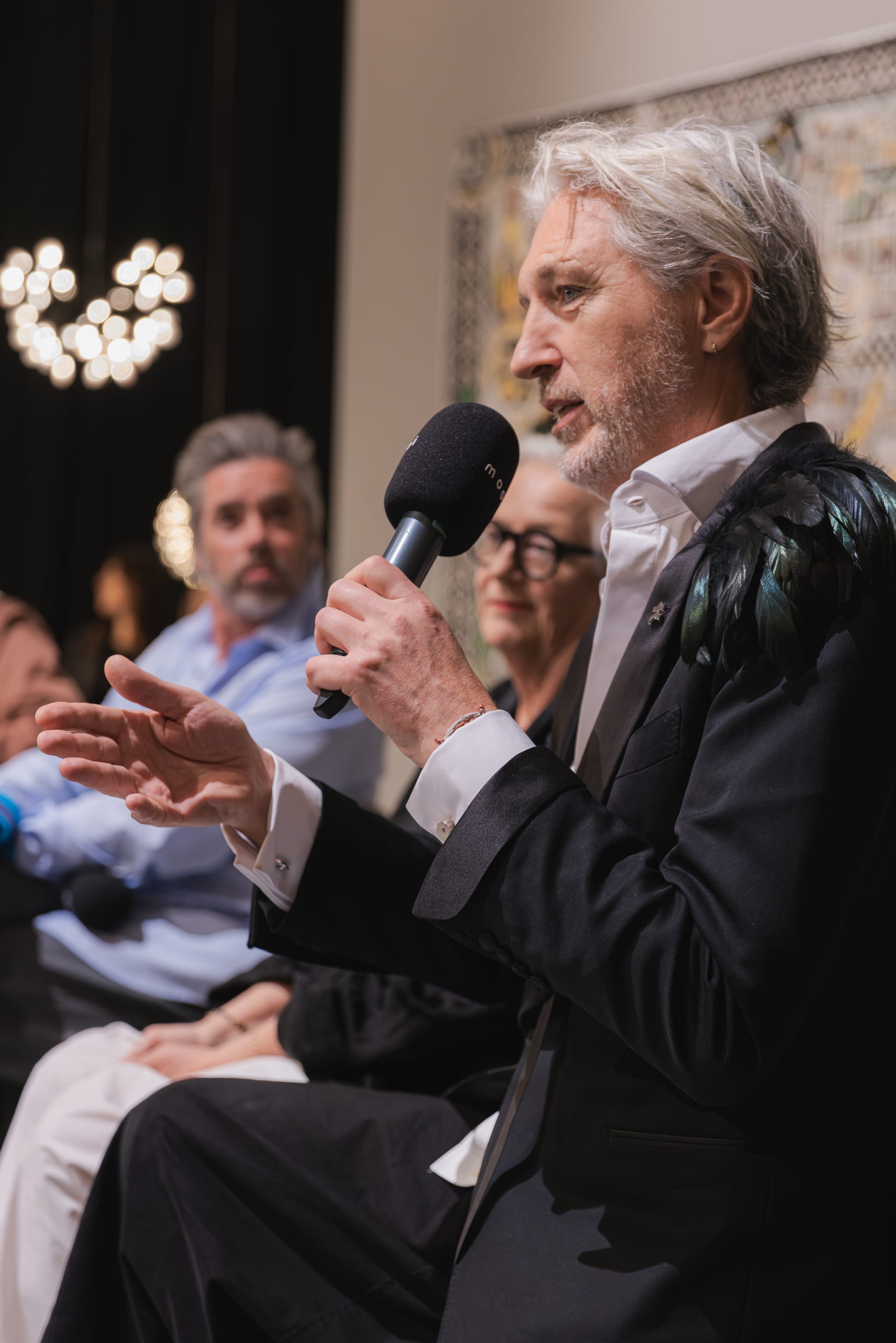
Be curious. Be open-minded. Be open-hearted. Look around until your eye is caught by something. A colour. A twig. A shell. An old toy. A folded napkin. A matchbox.
Suddenly, because your eye sees it, that becomes the beginning of a new idea.
So I would wait. Wonder. Make notes. Draw. Wait until it hits you.
Like hunting, in a way.
THE COST OF LIVING AND THE COST OF MAKING
The cost of living in big cities is now incredibly high. That makes it harder for young designers to make mistakes, experiment and find collaborators without needing immediate money.
But there is another side.
Access to production is much cheaper than it was 30 years ago. The first 3D printing machines we used cost half a million dollars. Now, for a few hundred, you can start printing and making.
Access to visualisation is faster. Access to production is faster. Young designers are less dependent on large companies.
So yes, life is expensive. But the tools are more available.
That changes the bargain.
POLITE DESIGN AND IMPOLITE DESIGN
There is space for everything.
There is space for polite design. There is also space for impolite design.
In the beginning, you are rebellious. You try to fight the system. Later, once you have managed to do that, your work starts talking to itself. Every new work creates inspiration for the next one.
A lot of polite design is necessary. If everyone bought my work, that would not be very practical. We need the industry too.
But we also need craft.
Craft is like playing an instrument. If you want to play the violin, it costs you 10,000 hours. If you want to draw well, it costs you 10,000 hours.
Drawing is not about making a nice drawing. It is the translation of your thought, through your hand, onto paper.
The better you do that, the freer you become.
Drawing also lets you take out the trash. You have many ideas inside you, and many of them are bad. So you put them on paper and throw them away.
You have to do it every day.
FROM MAGAZINES TO SOCIAL MEDIA
In the 1990s, magazines were a tool. They shared a lot of information about design, often technical information about how things were made.
But we started telling different kinds of stories. More personal stories. More imaginative stories.
That gave magazines something richer to write about. Design became less about engineering, and more about fantasy, character and culture.
Then the internet changed everything again. Communication escalated.
Moooi had a language that worked in that new world. We were not only talking about engineering. We were talking about people, imagination and emotion.
That helped shape us. But we also helped shape that conversation with a new idea of design.
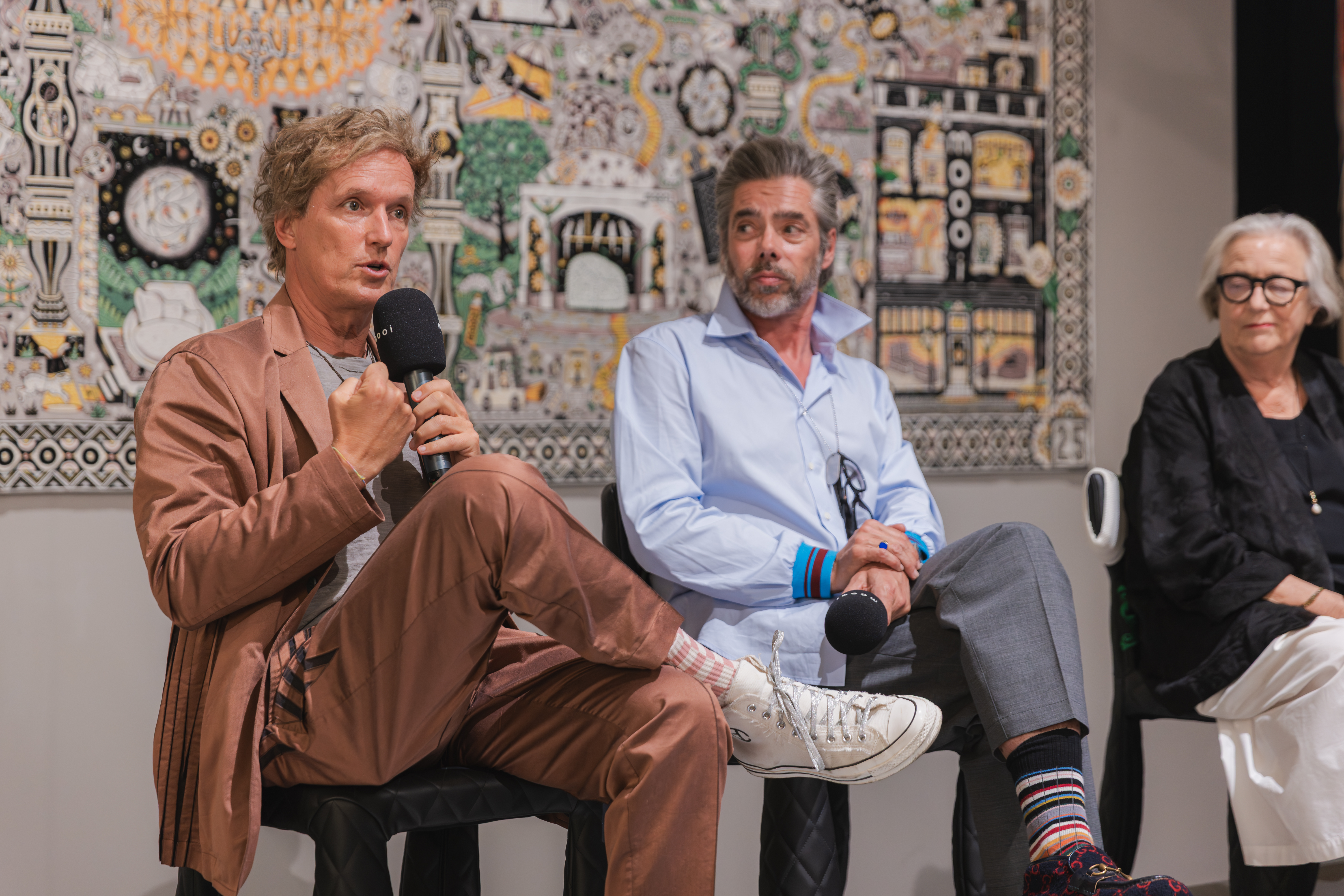
GROWING OLDER, BECOMING MORE RADICAL
I definitely became more radical.
Ten years ago, I published the Anti Fashion Manifesto. It made waves across the world, and it is still used in art schools and design schools.
I had to do it because the situation had become so dire. There was so much dishonesty. I needed to point out where everything went wrong.
From that moment, I became much more of an activist.
My favourite people are old eccentrics. That is what I aspire to be.
As you grow older and build something, you get more opportunity. With opportunity comes responsibility. We have to be more radical because we have the power to do it.
We can do the things we can do, so other people can do what they can do.
We have no choice. We must be radical.
MOOOI AS A PLATFORM FOR YOUNG TALENT
Moooi has always tried to give young designers a platform.
I created Moooi with Casper because nobody wanted to make my work. So it is written into the company that we always try to give opportunities to young people.
We made the first work of Maarten Baas. We made the first work of Bertjan Pot. We made the first work of Front. We made early works with many designers.
We are open to being the first to trust someone.
That is fundamental to Moooi. And we will keep doing that.
MISTAKES AS PART OF THE PATH
There is a difference between making mistakes and things going wrong because they are out of your hands.
Production-wise, I made terrible mistakes. But you need mistakes. It sounds like a cliché, but you cannot remove them. If you take one mistake out, you might make it again.
The millions of mistakes become part of the longer, winding road.
As a designer, you have to be comfortable making mistakes. Comfortable asking stupid questions. Comfortable being the person in the room who knows the least about a subject.
That is part of moving things forward.
At 25, you may be afraid of being wrong. Later, you become more comfortable with not knowing.
That is important.
WHAT DESIGN NEEDS TO UNLEARN
The worst thing is greed.
The importance of money has become dangerous for society and for our survival. I would love to see less eagerness for numbers and materials.
More humour. More modesty. More improvisation. More lightness. Fewer things.
We are panicking as consumers because there is too much stuff.
Think of the supermarket. You enter the boulevard of yoghurt. There are all the beautiful yoghurts, and then all the zero percent yoghurts, and then hundreds of choices. People stand there and panic. Sometimes they go home without yoghurt.
We need editing. We need curating. We need to streamline our thoughts and processes.
The problem is not only overproduction. It is the overproduction of the same things.
When every sofa looks the same, what do you choose? The brand? The designer? The price?
But when something is unique, it has no real competition.
That is why we need editors. That is why we need vision.
THE NEXT 25 YEARS: HUMAN INTELLIGENCE
I think we have misunderstood humanity massively.
For a few hundred years, we believed we were rational beings. Later, we believed we were modern beings. We saw ourselves as the epicentre of intelligence.
Now artificial intelligence has arrived. That means we need to understand human intelligence differently.
We are not fundamentally intelligent. We do silly things. All of us.
We cry at advertisements. We put a Christmas tree in the house. We take little balls from a box and hang them in the branches. We sing songs. We get goosebumps when a cat walks across a wall.
We are fantastically silly, poetic beings first.
Design has not fully seen that yet. It has lived with the idea that intelligent people make smart choices. But people do not make smart choices. They make human choices.
That is why we are beautiful.
I hope design finally understands who we are. With artificial intelligence, we can redefine humanity. We can write a new script for what it means to be human.
THE ANALOGUE REVOLUTION
Analogue is the word.
I believe what is happening now will force us into an analogue revolution. Something deeply human. The hand will become the most important instrument again.
Robots may do many other things for us. But we will move closer to natural resources. Perhaps outside big cities.
Education will become essential. Not because we need to train for one fixed job, but because we need to keep expressing ourselves throughout life.
Education should become fluid. Permanent. Until we die.
I call it the age of the amateur.
I think it will be amazing.
BETWEEN ANALOGUE AND DIGITAL
There will still be chairs. There will still be lights. Unless something truly awful happens and the whole rhythm is disturbed.
I do not know how fast artificial intelligence and robots will take over parts of our lives. But I do believe in a better balance between analogue and digital.
Technology should not be the reason something exists.
Ten years ago, people said something was good because it was made on a computer. Now people say something is modern because it is 3D printed.
But technology is temporary. Analogue thinking stays important.
I use artificial intelligence a lot in my studio. I see it as a new tool. Like a pencil, but somewhere in space.
Still, the computer cannot have your ultimate idea. You have to have that yourself.
AUTHENTICITY IN A GENERATED WORLD
For me, authenticity will become critical.
Studies show that when someone sees a real painting and a copy, the real one has a much stronger impact. So in a world where everything can be generated, authenticity becomes even more important.
There is also something beautiful about age.
Scientists now say adolescence continues until 29. It does not stop at 18.
My hope is that in 25 years, they tell me adolescence lasts until 60.
DUTCH DESIGN AND ITS FREEDOM
Twenty-five years ago, Dutch design emerged with a strong voice.
After 9/11, the idea of shiny, glamorous, serial design suddenly did not work in the same way. Many young form-givers and designers began making their own objects. The work became more crafted, sometimes digitally crafted, but still deeply personal.
At the Design Academy, there was a revolution of autonomous design. Designers no longer thought only about reproduction. They thought about one piece. One expression. Then the next.
That freedom from function became part of the essence of Dutch design.
But Dutch design did not appear only 25 years ago. It has roots going back more than 100 years, to De Stijl and Rietveld. There was a long pause, but the spirit was there.
In the 1990s, Droog Design reacted strongly against the polished design of the 1980s. Young designers were selected and brought onto an international platform.
Later, when Droog became less commercial, Moooi stepped into that space. It gave designers like Maarten Baas a platform. Then the galleries came. Design Basel came. The whole platform developed in the last 25 years.
There was support. There was money. That helped.
But the work was already there. The people were already there.
We should not feel dependent on things. We should make what we need. We should demand what we need.
When people have seen cool, they expect life to be cooler.
CLOSING
Thank you to our four guests and panellists.
Thank you for coming. Please stay around. There are drinks.
And because it is Moooi’s birthday, there is only one way to end.
Happy birthday to Moooi.